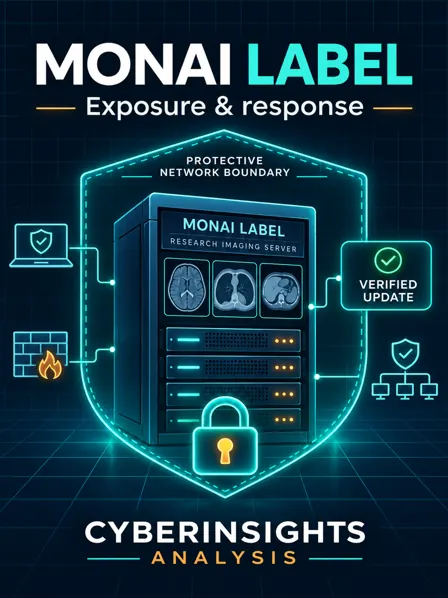
MONAI Label CVE-2026-133968: secure the service and investigate the exposure
MONAI Label CVE-2026-133968 response: identify affected deployments, restrict exposure, verify the supported security update and investigate suspicious changes.
THE CYBERINSIGHTS READING ROOM
Original explanations. Practical decisions. Evidence you can follow.

MONAI Label CVE-2026-133968 response: identify affected deployments, restrict exposure, verify the supported security update and investigate suspicious changes.

A defensive vCenter response guide: confirm affected versions, limit management access, verify patches, investigate privileged activity and document recovery evidence.

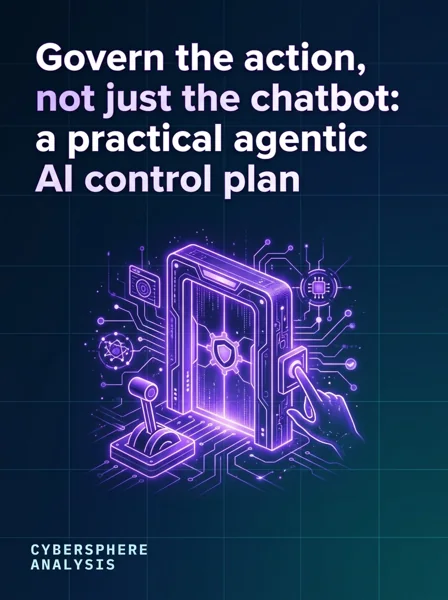
Discover AI use, separate data access from action authority, and validate identity, tool boundaries, approvals and emergency stopping for connected AI workflows.

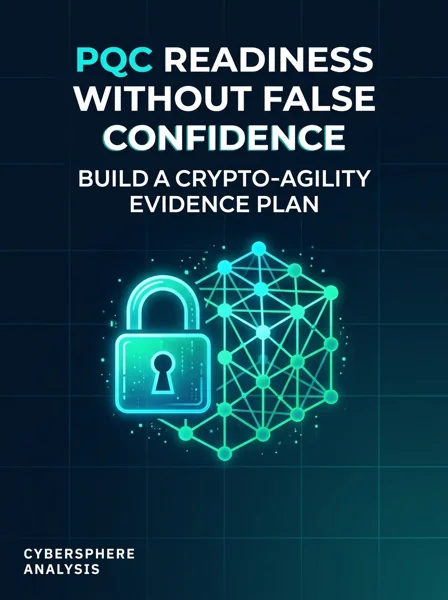
Inventory cryptographic dependencies, prioritize long-lived data and signatures, and test a supported migration path without turning a TLS screenshot into an enterprise readiness claim.

Black Friday cybersecurity tips for shoppers and businesses: spot scams, protect accounts, secure checkout, and respond to fraud with practical checklists.

Build a vendor-neutral Java4Shell defense plan with WAF coverage, firewalls, runtime mitigation and safe validation, with key limits and patching evidence.

Java4Shell response: identify bundled Java runtimes, assess exposure, verify patches and restarts, and investigate suspicious activity with clear evidence.

Check the finding’s trust boundary, confirm the intended access, and verify that remediation preserves legitimate workflows.

Contain a leaked credential, validate the replacement, and preserve evidence without copying the secret into incident records.

Check signed CloudTrail digests and document which accounts, regions, and time windows the validation covers.

The November 12 Exchange Online incident affected mailbox access and other Microsoft 365 workflows. Here is how the failure spread and what providers and customers can do to reduce the impact.

Run an isolated restore drill that measures recovery time, checks data integrity, and confirms that the application works.

Check whether privileged sign-in policies require phishing-resistant authentication, then verify enrollment, enforcement, and recovery with evidence.

Check effective S3 public access settings and verify that intended applications still work after closing public access.

Test whether Kubernetes rejects pods that violate your security policy while keeping compliant deployments and jobs running.
A practical way to verify that identity-provider and application sessions stop working after an account compromise.
How security teams can turn a known-exploited gateway advisory into an accountable mitigation decision and verify that the exposure is closed.